

Research
I study ice on other worlds.
Radar and the ice of Europa
- Radio Glaciology Lab, Stanford Doerr School of Sustainability
- Advisor: Dustin Schroeder
- Project leads: Natalie Wolfenbarger, then Annie Cheng
- 1 to 40 km
- how thick Europa's ice shell may be, on top of a global ocean
- 9 and 60 MHz
- the two frequencies of REASON, Europa Clipper's radar
- 2.5 to 2.8
- relative permittivity of the dry silica sand we use for ice (ice is 3.2)
- $1,500
- about what one of the lab's open-source radar systems costs
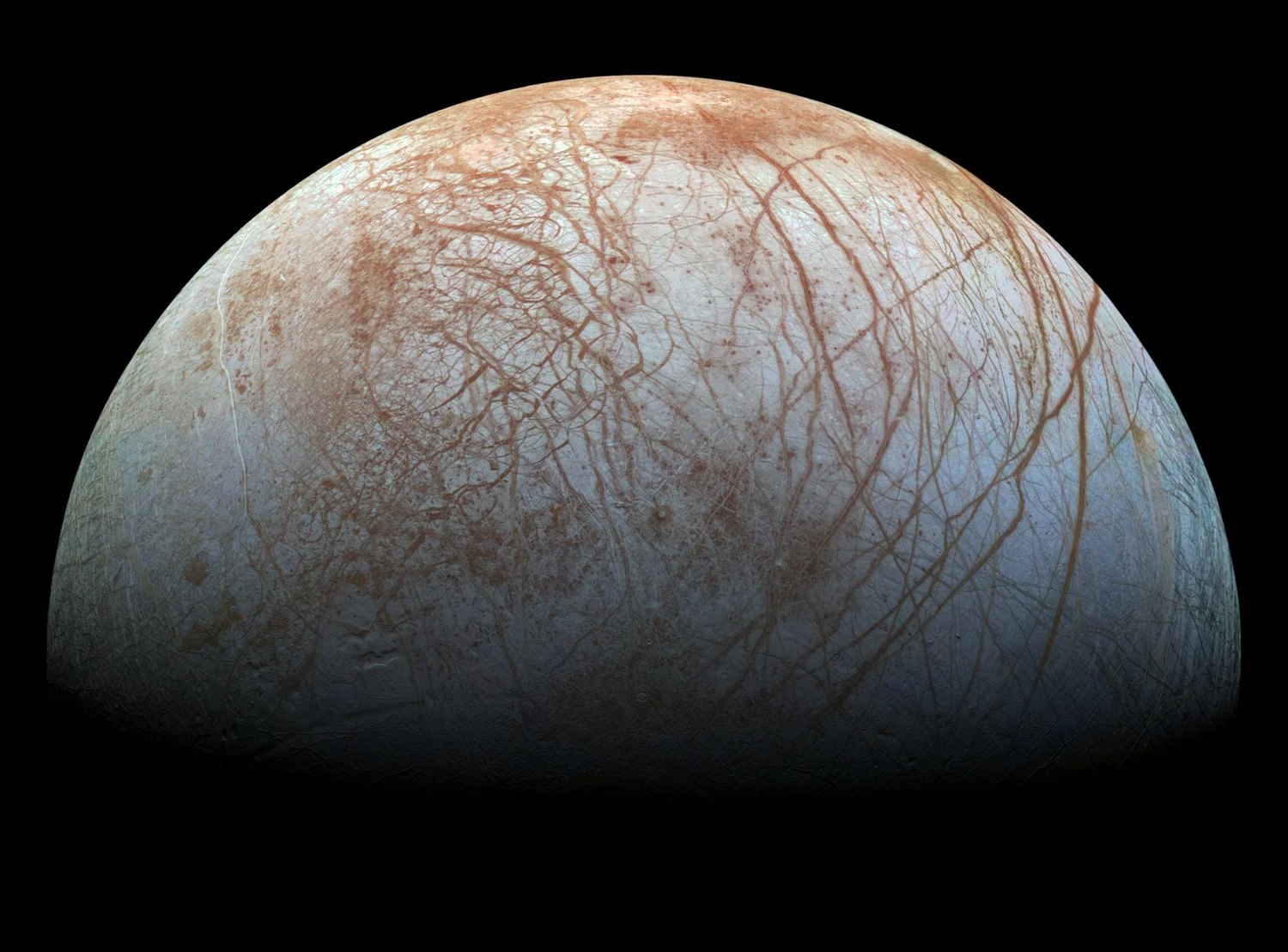
The question
Europa’s ice shell, somewhere between 1 and 40 km thick, sits on top of a global ocean. NASA’s Europa Clipper will look through it with REASON, a radar that transmits at 9 and 60 MHz. Reading those echoes means knowing what different kinds of ice do to a radar signal.
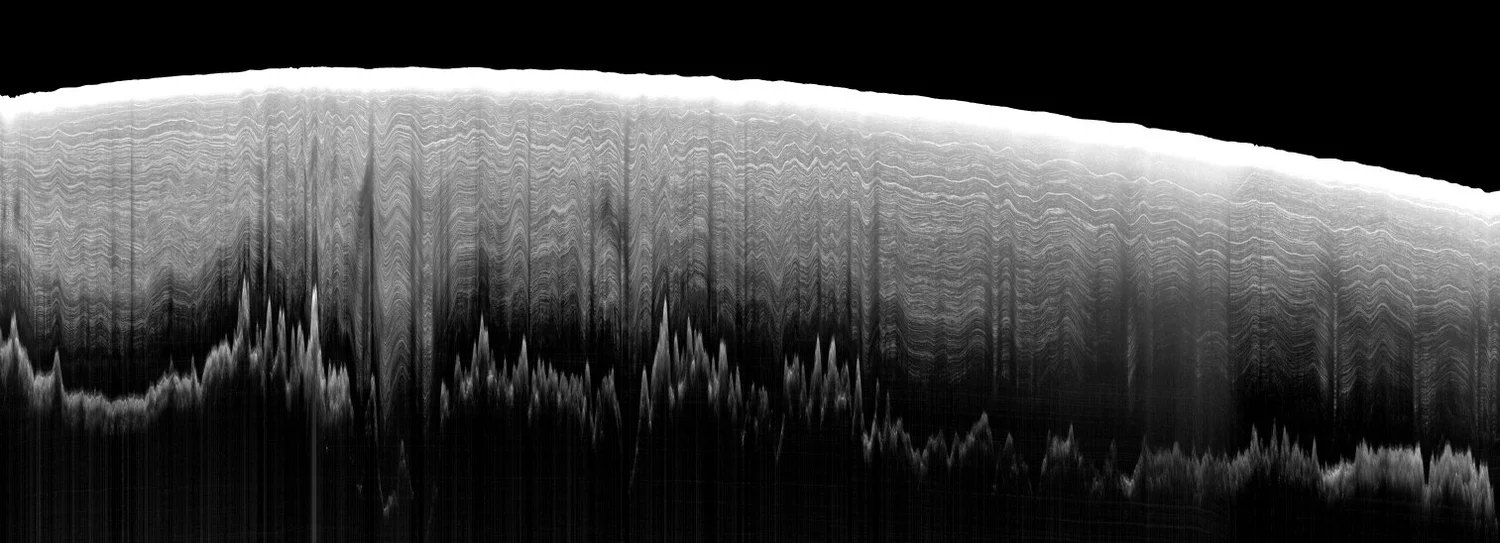
My part is brine
Pockets of chloride and sulfate brine trapped in the ice are conductive, so they reflect and absorb radar strongly.
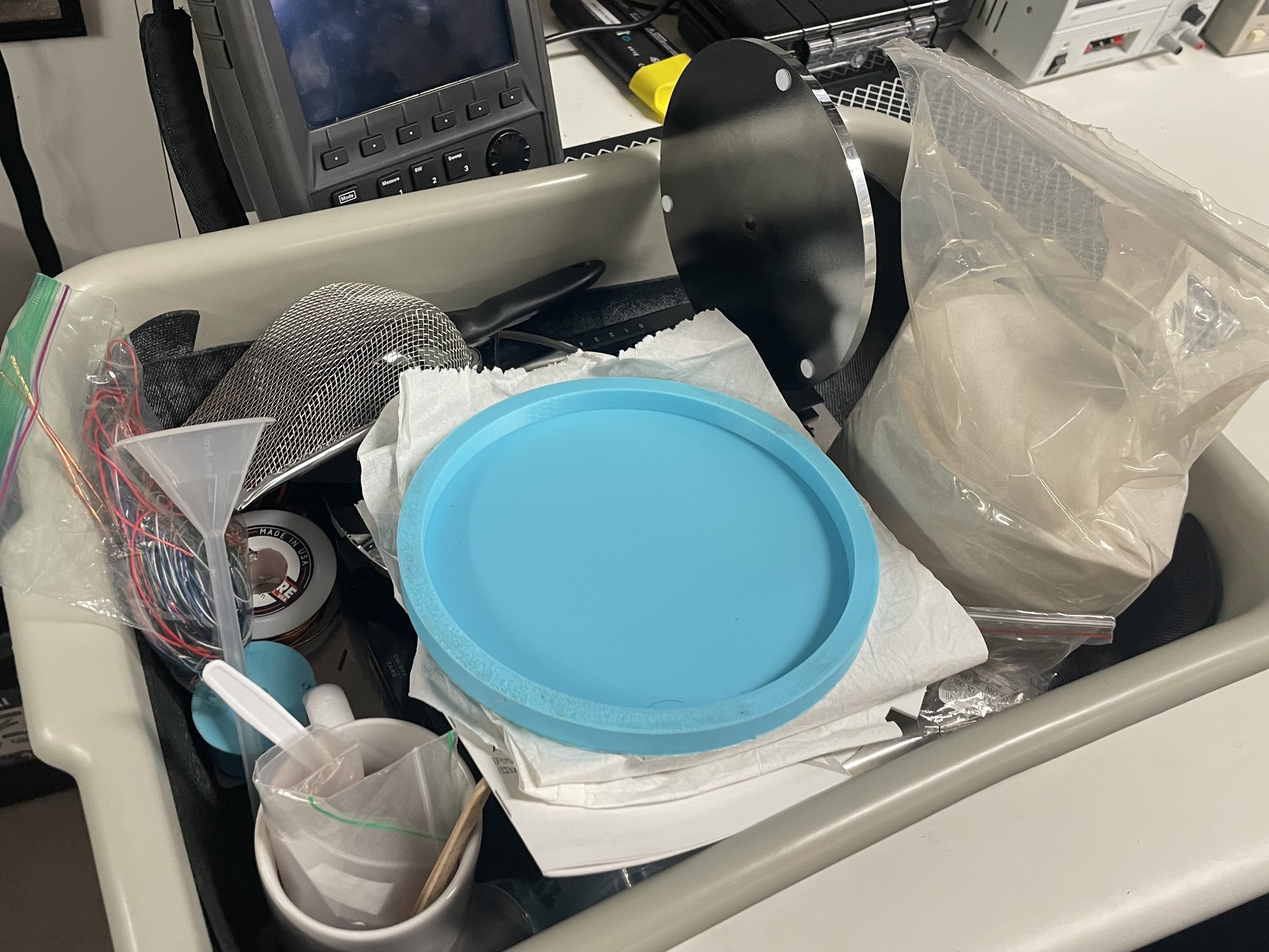
A stand-in for the ice
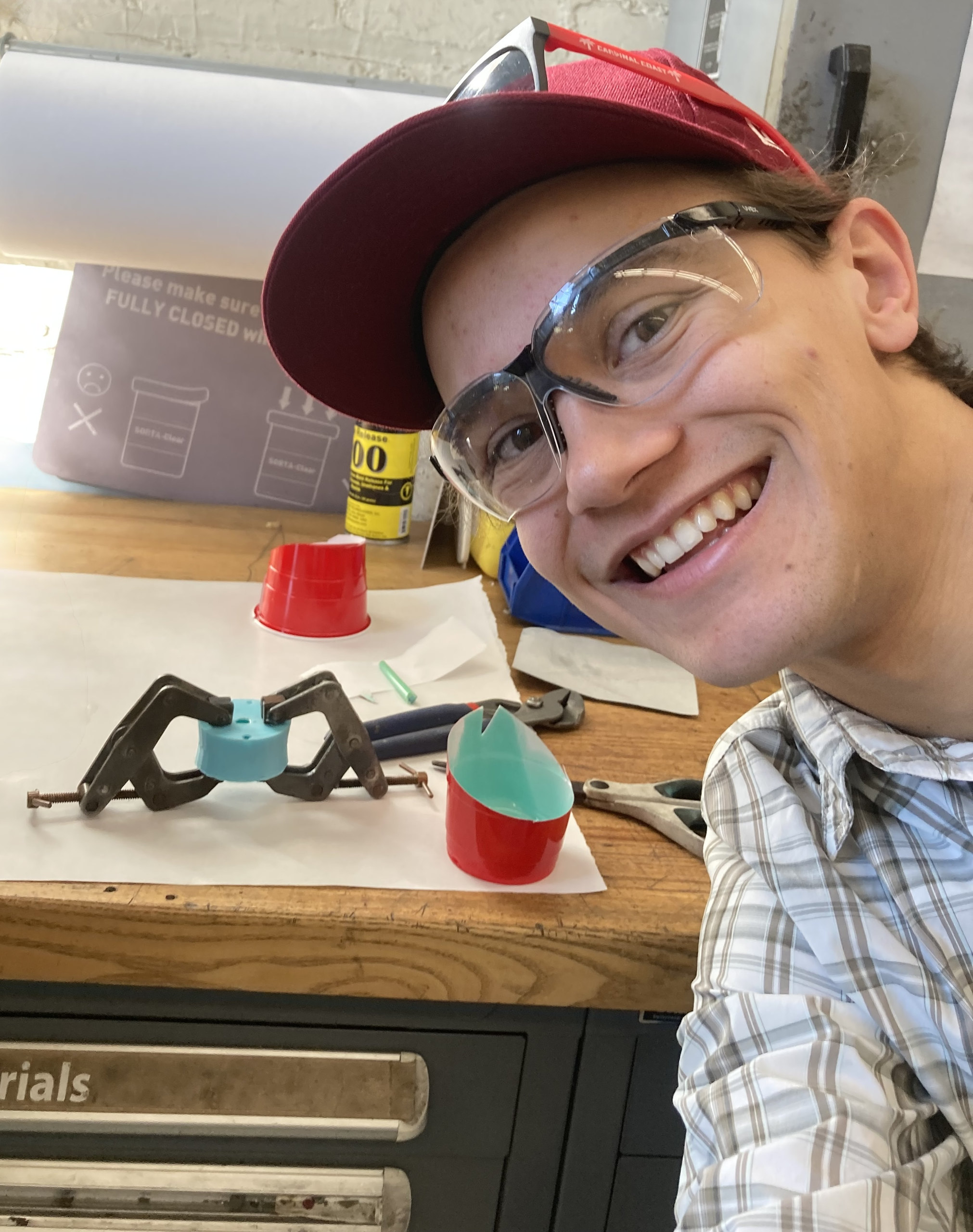
In the lab we stand in for the ice with dry silica sand (relative permittivity about 2.5 to 2.8, a little below ice’s 3.2) and for the brine with copper granules and wire at different concentrations and shapes.
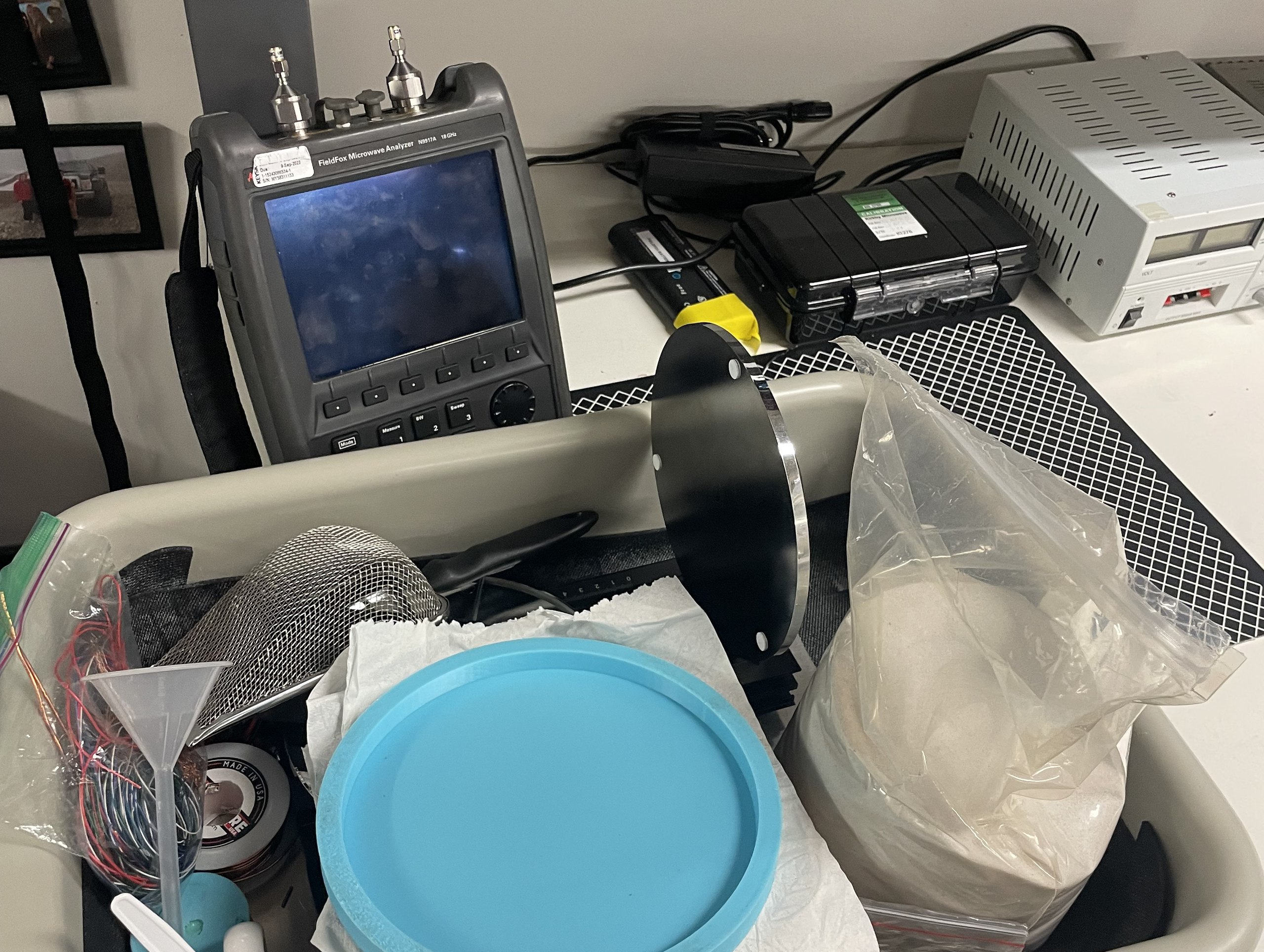
The measurement
I measure each mixture’s complex permittivity with a FieldFox vector network analyzer, using parallel-plate and transmission-line methods, then work out attenuation and reflectivity as the inclusion fraction changes.
What it shows so far
In most runs, adding copper raises the sand’s permittivity, and rods standing along the electric field raise it most. Under 3% copper by volume, the change is a few percent, close to the scatter between runs, so the next runs use more copper and a fixed gap between the plates. Loss is the harder half: dry sand absorbs too little for the plates to measure, so real salt water comes next. That bears on one of the big open questions about Europa: whether the shell is conductive or convective, which matters for whether it could support life.
Can the water get up?
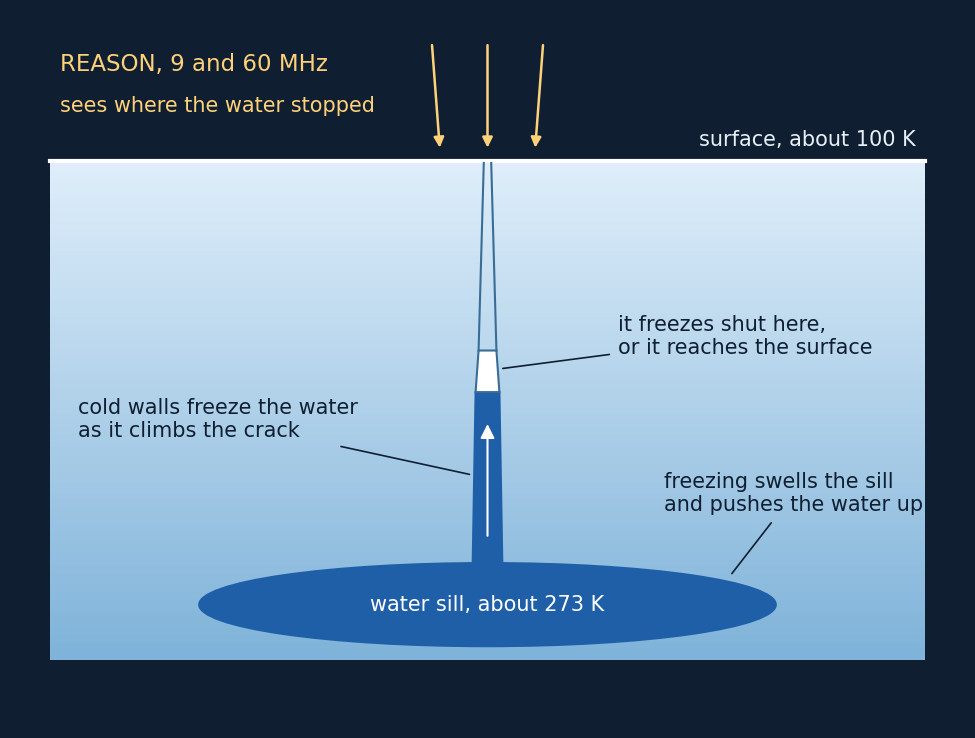
Europa’s double ridges may form over water that refreezes inside the shell, the way a double ridge in Greenland formed over a refreezing sill (Culberg, Schroeder and Steinbrügge, 2022). I’m writing a model of the race that decides it. A freezing sill swells and pushes water up a crack, and the crack’s cold walls freeze that water on its way. So far, narrow cracks freeze shut partway up, and wider ones can reach the surface before they seal. Wherever the water stops, it leaves briny ice at a depth REASON can reach, and the brine measurements above say how brightly that ice would echo.
Where it's going
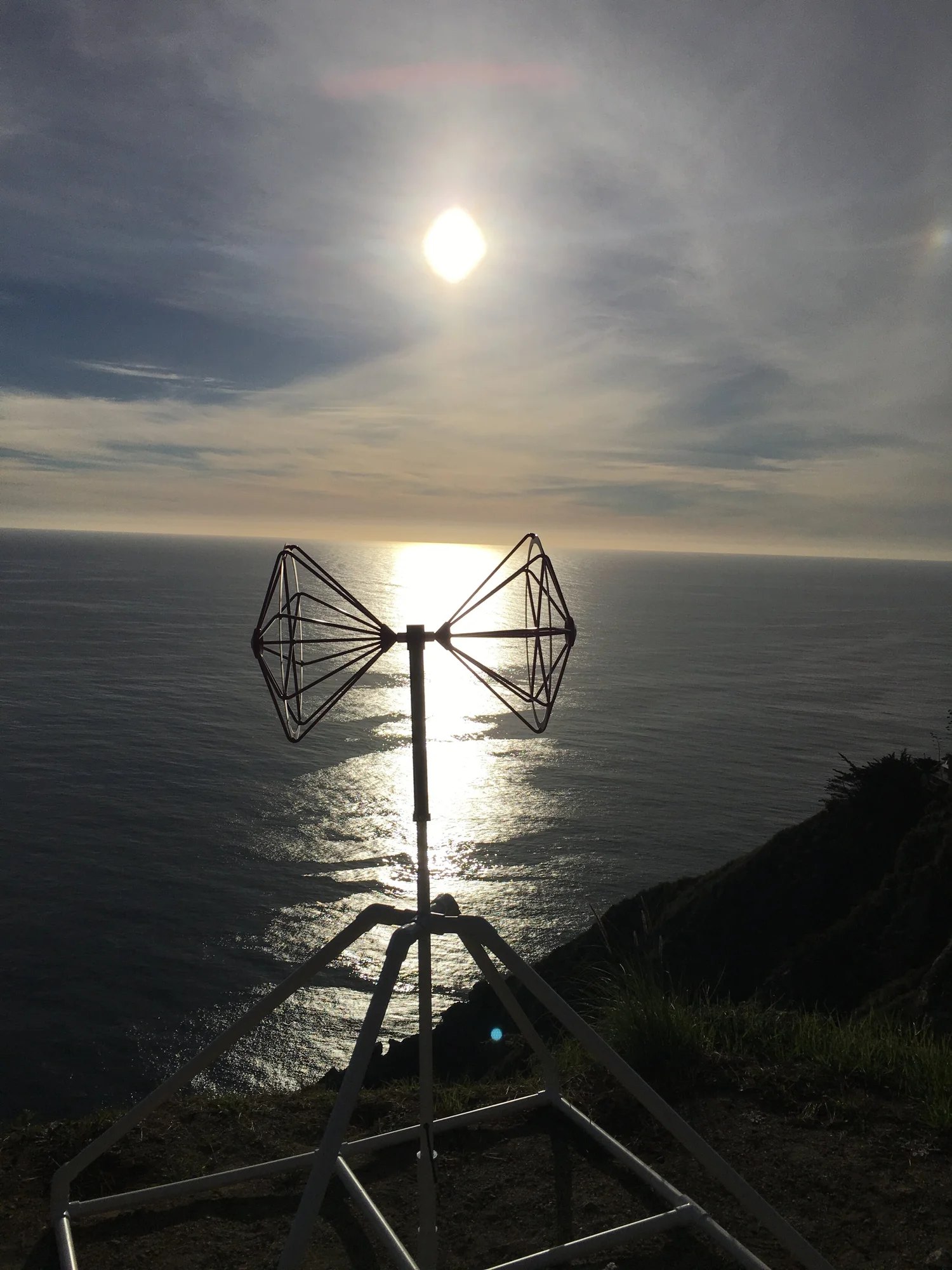
The larger project is a catalog of how each kind of inclusion changes the signal, so that a REASON echo can be read backward into what’s in the ice, including the briny ice a sill leaves where its water stopped. The lab also builds open-source radar systems that cost about $1,500.


Astrophysics research
- KIPAC, Stanford's Kavli Institute for Particle Astrophysics and Cosmology, 2025
- Mentor: Maya Beleznay
In 2025 I did astrophysics research at KIPAC, on spectra of two millisecond pulsar binaries, PSR J1036-4353 and PSR J1036-8317, from the SOAR telescope in Chile. I reduced the raw frames in IRAF that year. In 2026 I went back and finished both: Doppler shifts around each orbit, radial velocity curves, and from those the masses of the two neutron stars.
- Raw images from SOAR
- Bias, flat field, wavelength calibration
- Spectra
- Doppler shifts around each orbit
- Radial velocity curves
- Masses
Deep Field
A planetary science wiki that quizzes me back.
Deep Field is how I’m reading my way into planetary science. Every paper I add becomes a lesson I have to pass: short segments, its key ideas redrawn as my own diagrams, and a question at every step.
Every paper it cites gets a card in the library, and the cards link to each other. That’s where the connections show up. A 2022 paper that explains Europa’s double ridges with a look-alike in Greenland’s ice sheet and a 2026 paper on whether ocean water can climb a crack into Europa’s shallow ice end up asking the same question about water inside the shell. When a paper’s numbers don’t agree with each other, the lesson says so.
It grows with every paper I open. Here’s what’s in it so far.
- 14
- papers taught in full, so far
- 154
- papers they cite, each a card in the library
- 276
- links between cards
- 9
- themes, from Europa's ocean to radar sounding
Read so far
- Lada, C. J. (1987). Star formation: from OB associations to protostars. In M. Peimbert & J. Jugaku (Eds.), Star Forming Regions (IAU Symposium 115, pp. 1–18). Dordrecht: Reidel. doi.org/10.1017/S0074180900094766
- Marois, C. et al. (2008). Direct imaging of multiple planets orbiting the star HR 8799. Science 322, 1348–1352. Read with Marois, C. et al. (2010). Images of a fourth planet orbiting HR 8799. Nature 468, 1080–1083 (doi:10.1038/nature09684). doi.org/10.1126/science.1166585
- Mitri, G., & Showman, A. P. (2008). A model for the temperature-dependence of tidal dissipation in convective plumes on icy satellites: Implications for Europa and Enceladus. Icarus 195(2), 758–764. doi.org/10.1016/j.icarus.2008.01.010
- Pinte, C. et al. (2018). Kinematic evidence for an embedded protoplanet in a circumstellar disk. ApJ Letters 860, L13. doi.org/10.3847/2041-8213/aac6dc
- Culberg, R., Schroeder, D. M. & Steinbrügge, G. (2022). Double ridge formation over shallow water sills on Jupiter’s moon Europa. Nature Communications 13, 2007. doi.org/10.1038/s41467-022-29458-3
- Schlichting, H. E., & Young, E. D. (2022). Chemical equilibrium between cores, mantles, and atmospheres of super-Earths and sub-Neptunes and implications for their compositions, interiors, and evolution. The Planetary Science Journal 3(5), 127. doi.org/10.3847/PSJ/ac68e6
- Schroeder, D. M., Wolfenbarger, N. S., Steinbrügge, G. B., Culberg, R., Howell, S. M., Spiers, E., & Styczinski, M. (2024). Constraining the thickness of the conductive portion of Europa’s ice shell using sparse radar echoes. Geophysical Research Letters 51(20), e2024GL110635. doi.org/10.1029/2024GL110635
- Brin, A., Lauro, S. E., Cosciotti, B., Turchetti, G., Mattei, E., & Pettinelli, E. (2025). Electromagnetic measurements and modeling of rocky and icy crust simulants to support planetary radar sounder exploration. Journal of Geophysical Research: Planets, 130(6), e2025JE008942. doi.org/10.1029/2025JE008942
- Hills, B. H., Young, T. J., Lilien, D. A., Babcock, E., Bienert, N., Blankenship, D., Bradford, J., Brighi, G., Brisbourne, A., Dall, J., Drews, R., Eisen, O., Ershadi, M. R., Gerber, T. A., Holschuh, N., Jansen, D., Jordan, T. M., Karlsson, N. B., Li, J., Martín, C., Matsuoka, K., May, D., Oraschewski, F. M., Paden, J., Rathmann, N. M., Ross, N., Schroeder, D. M., Siegert, M., Siegfried, M. R., Smith, E., & Zeising, O. (2025). Radar polarimetry in glaciology: Theory, measurement techniques, and scientific applications for investigating the anisotropy of ice masses. Reviews of Geophysics 63(4), e2024RG000842. doi.org/10.1029/2024RG000842
- Wolfenbarger, N. S., Blankenship, D. D., Young, D. A., Scanlan, K. M., Chivers, C. J., Findlay, D., Steinbrügge, G. B., Chan, K., Grima, C., Soderlund, K. M., & Schroeder, D. M. (2025). Radar characterization of salt layers in Europa’s ice shell as a window into critical ice-ocean exchange processes. Geophysical Research Letters, 52(1), e2024GL109144. doi.org/10.1029/2024GL109144
- Cheng, A. H., Schroeder, D. M., Wolfenbarger, N. S., Shaper, R., Seltzer, C., & Hills, B. (2026). Anisotropic melt inclusions as a confounding signal for ice-penetrating radar observations. Geophysical Research Letters 53(5), e2025GL120182. doi.org/10.1029/2025GL120182
- Ojha, L., Barik, A., & Buffo, J. (2026). Limited direct fluid exchange between the deep subsurface ocean and the shallow subsurface environment of Europa. Nature Astronomy. doi.org/10.1038/s41550-026-02918-2
- Schroeder, D. M., Byrne, D., Chan, K., Peters, S. T., Haynes, M. S., & Blankenship, D. D. (2026). Limited contribution of incoherent energy to detectable planetary radar sounding echoes. Planetary and Space Science 280, 106308. doi.org/10.1016/j.pss.2026.106308
- Wolfenbarger, N. S., Broome, A. L., Schroeder, D. M., Ermakov, A. I., Bolton, S. J., & Blankenship, D. D. (2026). Passive microwave radiometry and active radar sounding as complementary tools for geophysical investigations of icy ocean worlds. Journal of Geophysical Research: Planets, 131(3), e2025JE009301. doi.org/10.1029/2025JE009301
The library: 154 papers, by theme
Is there an ocean?
- K. K. Khurana et al. (1998). Induced magnetic fields as evidence for subsurface oceans on Europa.
- R. T. Pappalardo et al. (1999). Does Europa have a subsurface ocean? Evaluation of the geological evidence.
- M. G. Kivelson et al. (2000). Galileo magnetometer measurements: a stronger case for a subsurface ocean at Europa.
- M. Neveu & A. R. Rhoden (2019). Evolution of Saturn’s mid-sized moons.
The ice shell: how thick, how warm
- G. W. Ojakangas & D. J. Stevenson (1989). Thermal state of an ice shell on Europa.
- R. T. Pappalardo et al. (1998). Geological evidence for solid-state convection in Europa’s ice shell.
- H. Hussmann, T. Spohn & K. Wieczerkowski (2002). Thermal equilibrium states of Europa’s ice shell: implications for internal ocean thickness and surface heat flow.
- F. Nimmo, B. Giese & R. T. Pappalardo (2003). Estimates of Europa’s ice shell thickness from elastically-supported topography.
- G. Tobie, G. Choblet & C. Sotin (2003). Tidally heated convection: constraints on Europa’s ice shell thickness.
- A. P. Showman & L. Han (2004). Numerical simulations of convection in Europa’s ice shell: implications for surface features.
- A. C. Barr & R. T. Pappalardo (2005). Onset of convection in the icy Galilean satellites: influence of rheology.
- G. Mitri & A. P. Showman (2005). Convective–conductive transitions and sensitivity of a convecting ice shell to perturbations in heat flux and tidal-heating rate: implications for Europa.
- G. Tobie, A. Mocquet & C. Sotin (2005). Tidal dissipation within large icy satellites: applications to Europa and Titan.
- F. Nimmo & R. T. Pappalardo (2006). Diapir-induced reorientation of Saturn’s moon Enceladus.
- W. B. McKinnon (2006). On convection in ice I shells of outer Solar System bodies, with detailed application to Callisto.
- G. Schubert, J. D. Anderson, B. J. Travis & J. Palguta (2007). Enceladus: present internal structure and differentiation by early and long-term radiogenic heating.
- M. Grott, F. Sohl & H. Hussmann (2007). Degree-one convection and the origin of Enceladus’ dichotomy.
- L. C. Quick & B. D. Marsh (2015). Constraining the thickness of Europa’s water-ice shell: insights from tidal dissipation and conductive cooling.
- B. C. Johnson et al. (2017). Porosity and salt content determine if subduction can occur in Europa’s ice shell.
- A. P. Green, L. G. J. Montési & C. M. Cooper (2021). The growth of Europa’s icy shell: convection and crystallization.
- S. M. Howell (2021). The likely thickness of Europa’s icy shell.
- S. Brown, Z. Zhang, S. Bolton, L. E. Bonnefoy, A. Ermakov, J. Feng et al. (2023). Microwave observations of Ganymede’s sub-surface ice: I. Ice temperature and structure.
- S. Levin, Z. Zhang, S. Bolton, S. Brown, A. Ermakov, J. Feng et al. (2025). Europa’s ice thickness and subsurface structure characterized by the Juno microwave radiometer.
Ridges and the surface
- L. Lliboutry (1954). The origin of penitents.
- A. H. Goodwin & D. G. Vaughan (1995). A topographic origin for double-ridge features in visible imagery of ice divides in Antarctica.
- R. T. Pappalardo & M. D. Coon (1996). A sea ice analog for the surface of Europa.
- R. Greenberg et al. (1998). Tectonic processes on Europa: tidal stresses, mechanical response, and visible features.
- S. D. Kadel, S. A. Fagents, R. Greeley & Galileo SSI Team (1998). Trough-bounding ridge pairs on Europa: considerations for an endogenic model of formation.
- R. Sullivan et al. (1998). Episodic plate separation and fracture on the surface of Europa.
- E. P. Turtle, H. J. Melosh & C. B. Phillips (1998). Tectonic modeling of the formation of Europan ridges.
- M. H. Carr et al. (1998). Evidence for a subsurface ocean on Europa.
- J. W. Head, R. T. Pappalardo & R. Sullivan (1999). Europa: morphological characteristics of ridges and triple bands from Galileo data (E4 and E6) and assessment of a linear diapirism model.
- R. Greenberg, G. V. Hoppa, B. R. Tufts, P. Geissler, J. Riley & S. Kadel (1999). Chaos on Europa.
- G. C. Collins, J. W. Head, R. T. Pappalardo & N. A. Spaun (2000). Evaluation of models for the formation of chaotic terrain on Europa.
- R. Greenberg & P. Geissler (2002). Europa’s dynamic icy crust.
- F. Nimmo & M. Manga (2002). Causes, characteristics and consequences of convective diapirism on Europa.
- R. Greenberg, M. A. Leake, G. V. Hoppa & B. R. Tufts (2003). Pits and uplifts on Europa.
- R. Greeley et al. (2004). A chapter in “Jupiter: The Planet, Satellites and Magnetosphere” (2004).
- P. H. Figueredo & R. Greeley (2004). Resurfacing history of Europa from pole-to-pole geological mapping.
- H. J. Melosh & E. P. Turtle (2004). Ridges on Europa: origin by incremental ice-wedging.
- E. B. Bierhaus, K. Zahnle & C. R. Chapman (2009). A chapter in the book “Europa” (2009).
- L. M. Prockter & G. W. Patterson (2009). A chapter in the book “Europa” (2009).
- C. E. Coulter, S. A. Kattenhorn & P. M. Schenk (2009). Topographic profile analysis and morphologic characterization of Europa’s double ridges.
- D. E. J. Hobley, J. M. Moore, A. D. Howard & O. M. Umurhan (2018). Formation of metre-scale bladed roughness on Europa’s surface by ablation of ice.
- S. K. Trumbo, M. E. Brown & K. P. Hand (2019). Sodium chloride on the surface of Europa.
- K. P. Hand, D. Berisford, T. Daimaru, J. Foster, A. E. Hofmann & B. Furst (2020). Penitente formation is unlikely on Europa.
- D. E. J. Hobley, J. M. Moore, A. D. Howard & O. M. Umurhan (2020). Reply to: Penitente formation is unlikely on Europa.
- A. R. Rhoden et al. (2021). Obliquity, precession, and fracture mechanics: implications of Europa’s global cycloid population.
- D. F. Berisford and 9 others (2021). Erosion of penitentes under experimental conditions relevant to ice-covered airless worlds.
- S. G. Warren (2022). Snow spikes (penitentes) in the dry Andes, but not on Europa: a defense of Lliboutry’s classic paper.
- R. Culberg, D. M. Schroeder & G. Steinbrügge (2023). Radar Sounding of a Greenland Analog for Double Ridge Formation on Europa (AGU Fall Meeting 2023, P52C-05, invited talk).
- S. K. Trumbo & M. E. Brown (2023). The distribution of CO₂ on Europa indicates an internal source of carbon.
Water inside the shell
- E. J. Gaidos & F. Nimmo (2000). Tectonics and water on Europa.
- F. Nimmo & E. Gaidos (2002). Strike-slip motion and double ridge formation on Europa.
- C. Sotin, J. W. Head & G. Tobie (2002). Europa: tidal heating of upwelling thermal plumes and the origin of lenticulae and chaos melting.
- S. A. Fagents (2003). Considerations for effusive cryovolcanism on Europa: the post-Galileo perspective.
- C. C. Porco and 24 colleagues (2006). Cassini observes the active south pole of Enceladus.
- J. R. Spencer et al. (2006). Cassini encounters Enceladus: background and the discovery of a south polar hot spot.
- M. Manga & C.-Y. Wang (2007). Pressurized oceans and the eruption of liquid water on Europa and Enceladus.
- F. Nimmo, J. R. Spencer, R. T. Pappalardo & M. E. Mullen (2007). Shear heating as the origin of the plumes and heat flux on Enceladus.
- J. M. Moore et al. (2009). A chapter in the book “Europa” (2009).
- B. E. Schmidt, D. D. Blankenship, G. W. Patterson & P. M. Schenk (2011). Active formation of ‘chaos terrain’ over shallow subsurface water on Europa.
- R. D. Lorenz et al. (2011). Analog environments for a Europa lander mission.
- A. J. Dombard, G. W. Patterson, A. P. Lederer & L. M. Prockter (2013). Flanking fractures and the formation of double ridges on Europa.
- S. A. Johnston & L. G. J. Montési (2014). Formation of ridges on Europa above crystallizing water bodies inside the ice shell.
- C. Michaut & M. Manga (2014). Domes, pits, and small chaos on Europa produced by water sills.
- K. L. Craft, G. W. Patterson, R. P. Lowell & L. Germanovich (2016). Fracturing and flow: investigations on the formation of shallow water sills on Europa.
- K. Kalousová, O. Souček, G. Tobie, G. Choblet & O. Čadek (2016). Water generation and transport below Europa’s strike-slip faults.
- M. Manga & C. Michaut (2017). Formation of lenticulae on Europa by saucer-shaped sills.
- G. Steinbrügge et al. (2020). Brine migration and impact-induced cryovolcanism on Europa.
- K. P. Hand, C. Sotin, A. Hayes & A. Coustenis (2020). On the habitability and future exploration of Ocean Worlds.
- N. S. Wolfenbarger, M. G. Fox-Powell, J. J. Buffo, K. M. Soderlund & D. D. Blankenship (2022). Compositional controls on the distribution of brine in Europa’s ice shell.
- D. E. Stillman, E. Pettinelli, S. E. Lauro, E. Mattei, G. Caprarelli, B. Cosciotti et al. (2022). Partially-saturated brines within basal ice or sediments can explain the bright basal reflections in the South Polar Layered Deposits.
Greenland’s firn and meltwater
- S. V. Nghiem et al. (2012). The extreme melt across the Greenland ice sheet in 2012.
- P. Kuipers Munneke et al. (2015). Elevation change of the Greenland Ice Sheet due to surface mass balance and firn processes, 1960–2014.
- L. S. Koenig et al. (2015). Wintertime storage of water in buried supraglacial lakes across the Greenland Ice Sheet.
- C. Miège et al. (2016). Spatial extent and temporal variability of Greenland firn aquifers detected by ground and airborne radars.
- H. Machguth et al. (2016). Greenland meltwater storage in firn limited by near-surface ice formation.
- M. MacFerrin et al. (2019). Rapid expansion of Greenland’s low-permeability ice slabs.
- J. C. Ryan et al. (2019). Greenland Ice Sheet surface melt amplified by snowline migration and bare ice exposure.
- R. Culberg, D. M. Schroeder & W. Chu (2021). Extreme melt season ice layers reduce firn permeability across Greenland.
Radar sounding
- M. V. Berry (1973). The statistical properties of echoes diffracted from rough surfaces.
- B. A. Campbell & M. K. Shepard (2003). Coherent and incoherent components in near-nadir radar scattering: applications to radar sounding of Mars.
- M. E. Peters, D. D. Blankenship & D. L. Morse (2005). Analysis techniques for coherent airborne radar sounding: application to West Antarctic ice streams.
- S. Fujita, H. Maeno & K. Matsuoka (2006). Radio-wave depolarization and scattering within ice sheets: a matrix-based model to link radar and ice-core measurements and its application.
- S. P. Carter, D. D. Blankenship, M. E. Peters, D. A. Young, J. W. Holt & D. L. Morse (2007). Radar-based subglacial lake classification in Antarctica.
- J. A. MacGregor, D. P. Winebrenner, H. Conway, K. Matsuoka, P. A. Mayewski & G. D. Clow (2007). Modeling englacial radar attenuation at Siple Dome, West Antarctica, using ice chemistry and temperature data.
- C. Grima, W. Kofman, A. Herique, R. Orosei & R. Seu (2012). Quantitative analysis of Mars surface radar reflectivity at 20 MHz.
- A. Zirizzotti et al. (2014). Electromagnetic ice absorption rate at Dome C, Antarctica.
- J. A. MacGregor et al. (2015). Radar attenuation and temperature within the Greenland Ice Sheet.
- Y. Aglyamov, D. M. Schroeder & S. D. Vance (2017). Bright prospects for radar detection of Europa’s ocean.
- K. Kalousová, D. M. Schroeder & K. M. Soderlund (2017). Radar attenuation in Europa’s ice shell: Obstacles and opportunities for constraining the shell thickness and its thermal structure.
- M. S. Haynes, E. Chapin & D. M. Schroeder (2018). Geometric power fall-off in radar sounding.
- T. M. Jordan, D. M. Schroeder, D. Castelletti, J. Li & J. Dall (2019). A polarimetric coherence method to determine ice crystal orientation fabric from radar sounding: Application to the NEEM ice core region.
- S. S. Thompson et al. (2020). Comparing satellite and helicopter-based methods for observing crevasses.
- R. Culberg & D. M. Schroeder (2020). Strong potential for the detection of refrozen ice layers in Greenland’s firn by airborne radar sounding.
- B. H. Hills, K. Christianson & N. Holschuh (2020). A framework for attenuation method selection evaluated with ice-penetrating radar data at South Pole Lake.
- T. J. Young, D. M. Schroeder, T. M. Jordan, P. Christoffersen, S. M. Tulaczyk, R. Culberg & N. L. Bienert (2021). Inferring ice fabric from birefringence loss in airborne radargrams: Application to the eastern shear margin of Thwaites Glacier, West Antarctica.
- C. Grima, N. E. Putzig, B. A. Campbell, M. Perry, S. P. Gulick, R. C. Miller, A. T. Russell, K. M. Scanlan, G. Steinbrügge, D. A. Young et al. (2022). Investigating the martian surface at decametric scale: population, distribution, and dimension of heterogeneity from radar statistics.
- M. R. Ershadi, R. Drews, C. Martín, O. Eisen, C. Ritz, H. Corr et al. (2022). Polarimetric radar reveals the spatial distribution of ice fabric at domes and divides in East Antarctica.
- O. Souček, M. Běhounková, D. M. Schroeder, N. S. Wolfenbarger, K. Kalousová, G. Steinbrügge & K. M. Soderlund (2023). Radar attenuation in Enceladus’ ice shell: Obstacles and opportunities for constraining shell thickness, chemistry, and thermal structure.
- A. L. Broome, D. M. Schroeder & J. T. Johnson (2023). Joint active and passive microwave thermometry of ice sheets.
- C. Gerekos, M. S. Haynes, D. M. Schroeder & D. D. Blankenship (2023). The phase response of a rough rectangular facet for radar sounder simulations of both coherent and incoherent scattering.
- D. D. Blankenship, A. Moussessian, E. Chapin, D. A. Young, G. Wesley Patterson, J. J. Plaut et al. (2024). Radar for Europa Assessment and Sounding: Ocean to Near-surface (REASON).
- G. Turchetti, S. Lauro, E. Pettinelli, B. Cosciotti, E. Mattei & A. Brin (2026). Dielectric Characterization of Salty-Ice Analogues and Simulations of Radar Signal Propagation Through the Icy Crust of Jovian Moons (EGU General Assembly 2026).
- A. Cheng, N. Wolfenbarger & D. Schroeder (2026). Constraining the thermophysical structure and composition of Europa’s ice shell through radar detection of eutectic interfaces (EGU General Assembly 2026).
Methods, data and tools
- M. A. Biot (1954). Theory of stress–strain relations in anisotropic viscoelasticity and relaxation phenomena.
- P. T. Delaney & D. F. McTigue (1994). Volume of magma accumulation or withdrawal estimated from surface uplift or subsidence, with application to the 1960 collapse of Kilauea volcano.
- H. Miller & M. Schwager; F. Wilhelms (2000). Density (B29, B16) and conductivity (B26–B29) of ice cores from the North Greenland Traverse.
- Y. Fialko, Y. Khazan & M. Simons (2001). Deformation due to a pressurized horizontal circular crack in an elastic half-space, with applications to volcano geodesy.
- E. Mattei, S. E. Lauro, E. Pettinelli & G. Vannaroni (2013). Coaxial-cage transmission line for electromagnetic parameters estimation.
- F. Rodríguez-Morales et al. (2014). Advanced multifrequency radar instrumentation for polar research.
- W. Schwanghart & D. Scherler (2014). TopoToolbox 2: MATLAB-based software for topographic analysis and modeling in Earth surface sciences.
- M.-J. Noh & I. M. Howat (2015). Automated stereo-photogrammetric DEM generation at high latitudes (SETSM).
- Z. Wang et al. (2016). Multichannel wideband synthetic aperture radar for ice sheet remote sensing.
- X. Fettweis et al. (2017). Reconstructions of the 1900–2015 Greenland ice sheet surface mass balance using the regional climate MAR model.
- L. S. Koenig & L. N. Montgomery (2018). SUMup accumulation on land ice subdataset, Greenland and Antarctica, 1987–2018.
- C. Porter et al. (2018). ArcticDEM, V1.
- X. Fettweis & A. Rennermalm (2020). Model simulations from MAR over Greenland, 1948–2016.
- D. C. Hickson, A. L. Boivin, C. A. Tsai, M. G. Daly & R. R. Ghent (2020). Modeling the dielectric properties of minerals from crystals to bulk powders for improved interpretation of asteroid radar observations.
- R. Culberg; CReSIS (2022). Supporting data and code for the paper, and the CReSIS radar toolbox.
- B. Cosciotti, E. Mattei, A. Brin, S. E. Lauro, D. E. Stillman, A. Cunje et al. (2023). Can clay mimic the high reflectivity of briny water below the Martian SPLD?.
- Z. Zhang, S. Brown, S. Bolton, S. Levin, V. Adumitroaie, L. E. Bonnefoy et al. (2023). Microwave observations of Ganymede’s sub-surface ice: 2. Reflected radiation.
Planets beyond the Solar System
- A. S. Ackerman & M. S. Marley (2001). Precipitating condensation clouds in substellar atmospheres.
- I. Baraffe, G. Chabrier, T. S. Barman, F. Allard & P. H. Hauschildt (2003). Evolutionary models for cool brown dwarfs and extrasolar giant planets. The case of HD 209458.
- R. R. Rafikov (2005). Can giant planets form by direct gravitational instability?.
- C. Marois, D. Lafrenière, R. Doyon, B. Macintosh & D. Nadeau (2006). Angular differential imaging: a powerful high-contrast imaging technique.
- D. Lafrenière, C. Marois, R. Doyon, D. Nadeau & É. Artigau (2007). A new algorithm for point-spread function subtraction in high-contrast imaging: a demonstration with angular differential imaging.
- M. S. Marley, J. J. Fortney, O. Hubickyj, P. Bodenheimer & J. J. Lissauer (2007). On the luminosity of young Jupiters.
- P. Kalas et al. (2008). Optical images of an exosolar planet 25 light-years from Earth.
- S. E. Dodson-Robinson, D. Veras, E. B. Ford & C. A. Beichman (2009). The formation mechanism of gas giants on wide orbits.
- K. Y. L. Su et al. (2009). The debris disk around HR 8799.
- D. C. Fabrycky & R. A. Murray-Clay (2010). Stability of the directly imaged multiplanet system HR 8799: resonance and masses.
- K. M. Kratter, R. A. Murray-Clay & A. N. Youdin (2010). The runts of the litter: why planets formed through gravitational instability can only be failed binary stars.
- S. Ginzburg, H. E. Schlichting & R. Sari (2016). Super-Earth atmospheres: self-consistent gas accretion and retention.
- Y. Chachan & D. J. Stevenson (2018). On the role of dissolved gases in the atmosphere retention of low-mass low-density planets.
- A. Gupta & H. E. Schlichting (2019). Sculpting the valley in the radius distribution of small exoplanets as a by-product of planet formation: the core-powered mass-loss mechanism.
- E. S. Kite, B. Fegley, L. Schaefer & E. B. Ford (2019). Superabundance of exoplanet sub-Neptunes explained by fugacity crisis.
- E. Agol et al. (2021). Refining the transit-timing and photometric analysis of TRAPPIST-1: masses, radii, densities, dynamics, and ephemerides.
- H. E. Schlichting & E. D. Young (2022). Chemical equilibrium between cores, mantles, and atmospheres of super-Earths and sub-Neptunes and implications for their compositions, interiors, and evolution.
- W. Misener & H. E. Schlichting (2022). The importance of silicate vapour in determining the structure, radii, and envelope mass fractions of sub-Neptunes.
- E. D. Young, A. Shahar & H. E. Schlichting (2023). Earth shaped by primordial H₂ atmospheres.
How stars form
- R. B. Larson (1973). Processes in collapsing interstellar clouds.
- D. Lynden-Bell & J. E. Pringle (1974). The evolution of viscous discs and the origin of the nebular variables.
- B. G. Elmegreen & C. J. Lada (1977). Sequential formation of subgroups in OB associations.
- A. P. Whitworth (1979). The erosion and dispersal of massive molecular clouds by young stars.
- R. Duerr, C. L. Imhoff & C. J. Lada (1982). Star formation in the λ Ori region. I. The distribution of young objects.
- B. A. Wilking & C. J. Lada (1983). The discovery of new embedded sources in the centrally condensed core of the ρ Ophiuchi dark cloud: the formation of a bound cluster?.
- C. J. Lada & B. A. Wilking (1984). The nature of the embedded population in the ρ Ophiuchi dark cloud: mid-infrared observations.
- C. J. Lada (1985). Cold outflows, energetic winds, and enigmatic jets around young stellar objects.
- F. C. Adams & F. H. Shu (1985). Infrared emission from protostars.
- P. C. Myers (1985). Molecular cloud cores.
- F. C. Adams & F. H. Shu (1986). Infrared spectra of rotating protostars.
- F. C. Adams, C. J. Lada & F. H. Shu (1987). Spectral evolution of young stellar objects.
The tools I use most
Code
- Python
- NumPy
- SciPy
- Matplotlib
- Astropy
Lab
- Vector network analyzer measurement and calibration
- Dielectric measurement methods
Telescope data
- IRAF/PyRAF spectral reduction
Building
- Fabrication at Stanford's Lab64
I'm happy to talk about any of this.
Write to me